
How to Find Montgomery County Arrest Records
There is no single public mugshot or booking website for the county. Arrest information surfaces in a few official places instead. After an arrest, the charge is filed in court and shows up on Maryland Judiciary Case Search once it becomes public. To confirm that someone is in custody, you call the Department of Correction and Rehabilitation Inmate Records Section, since the county does not post a web jail roster.
Have the person's full legal name and, if you can, a date of birth. Those two details let staff and the court index tell apart people with similar names.
- Search Maryland Judiciary Case Search by name to find the criminal case and charges.
- Call the Inmate Records Section at 240-777-9730 to confirm current custody.
- Note the case number from Case Search for any copy request.
- Request certified court documents through Central Files if you need them.
Prosecution is handled by the Montgomery County State's Attorney's Office, whose official homepage is shown below.
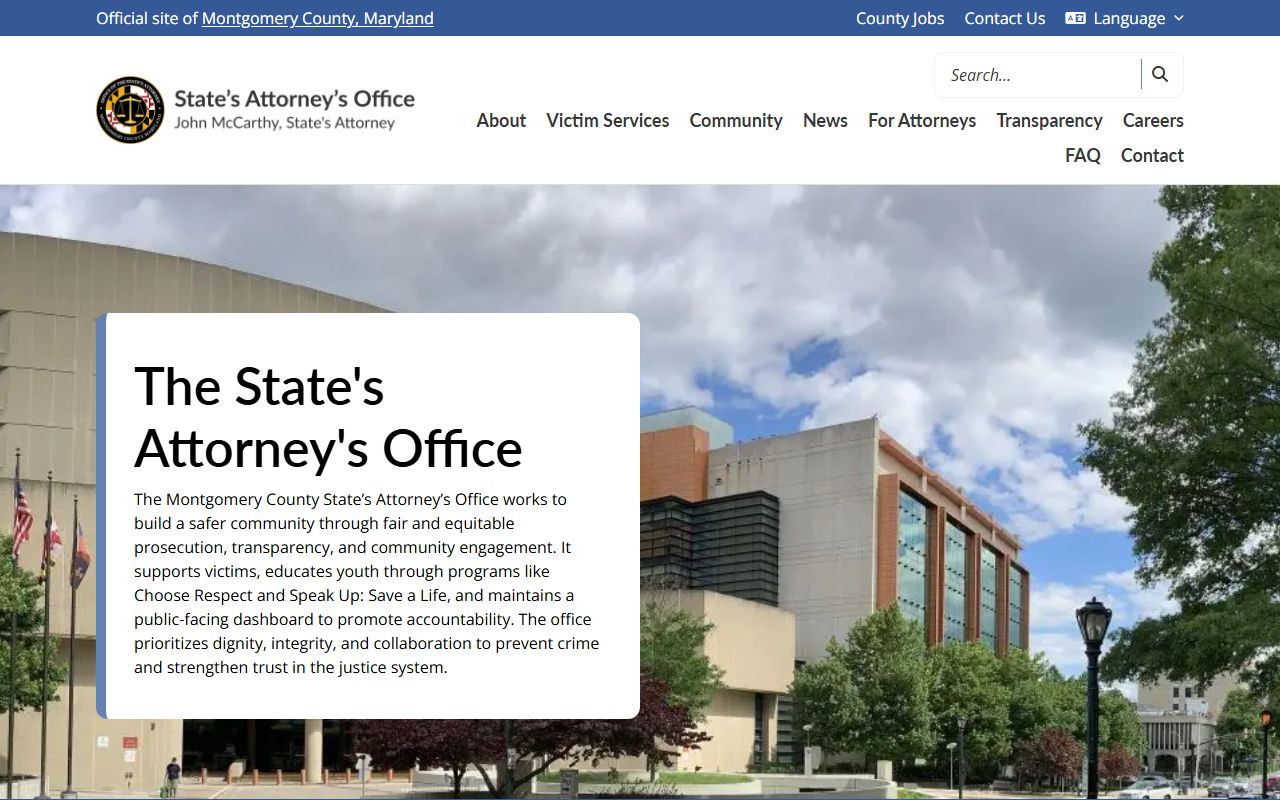
That office decides which charges to pursue and can also route eligible cases into diversion programs.
What Montgomery County Arrest Records Show
An arrest record captures the booking event and the early charge. It is not the final word on a case, but it tells you what police alleged and whether the person was held. Once the case reaches court, the docket fills in pleas, hearings, and the disposition.
The fields you may find across arrest and early case records include:
- Name and identifying details of the person arrested.
- Arrest or booking date and the arresting agency.
- Charge or statute cited at booking.
- Bond information and custody status.
- Case number once the charge is filed in court.
The county does not publish mugshots, booking numbers, or housing units in an online roster. That information is confirmed by phone through the Inmate Records Section, not on a public website.
Booking and Initial Appearance
After an arrest, a person may be taken to the Montgomery County Detention Center for intake. Intake includes identity checks, a property inventory, medical and mental-health screening, and creation of a booking record. Bond and the timing of an initial appearance depend on the charge and Maryland criminal procedure.
To confirm custody, location, or eligibility for release, call the Inmate Records Section rather than relying on third-party jail sites. The inmate records page explains the lookup steps and facility contacts in detail.
Arrest Record vs Criminal Court Record
These two records come from different stages and different agencies. An arrest record is created by police at booking. A criminal court record is created by the court once charges are filed and the case moves forward. They often overlap, but they answer different questions.
| Point | Arrest Record | Criminal Court Record |
|---|---|---|
| Created by | Police at booking | The court after charges are filed |
| Shows | Booking, charges, custody status | Pleas, hearings, verdicts, sentencing |
| Where to find it | DOCR custody phone line, charging papers | Maryland Case Search, Central Files |
| Final outcome | Not shown | Disposition and sentence |
For the full case history, the court record on the court records page is the authoritative source.
Charges vs Convictions in Montgomery County
This distinction matters more than any other. A charge is an accusation. A conviction is a finding of guilt. Many charges never become convictions. The disposition field on a court record is what tells you the difference, so always read it before drawing a conclusion about someone.
| Charge Outcome | What It Means |
|---|---|
| Nolle prosequi | The prosecutor dropped the charge. |
| Stet | The case sits on an inactive docket under conditions. |
| Probation before judgment | A guilty finding is held back while conditions are met. |
| Acquittal | The court found the person not guilty. |
| Conviction | A guilty finding entered by plea or trial. |
Criminal Court Records by Court Level
Maryland splits criminal cases between two trial courts. Felonies and jury-trial matters land in the Circuit Court. Misdemeanors and preliminary hearings often begin in the District Court. Both produce records that appear on Case Search unless a law restricts them.
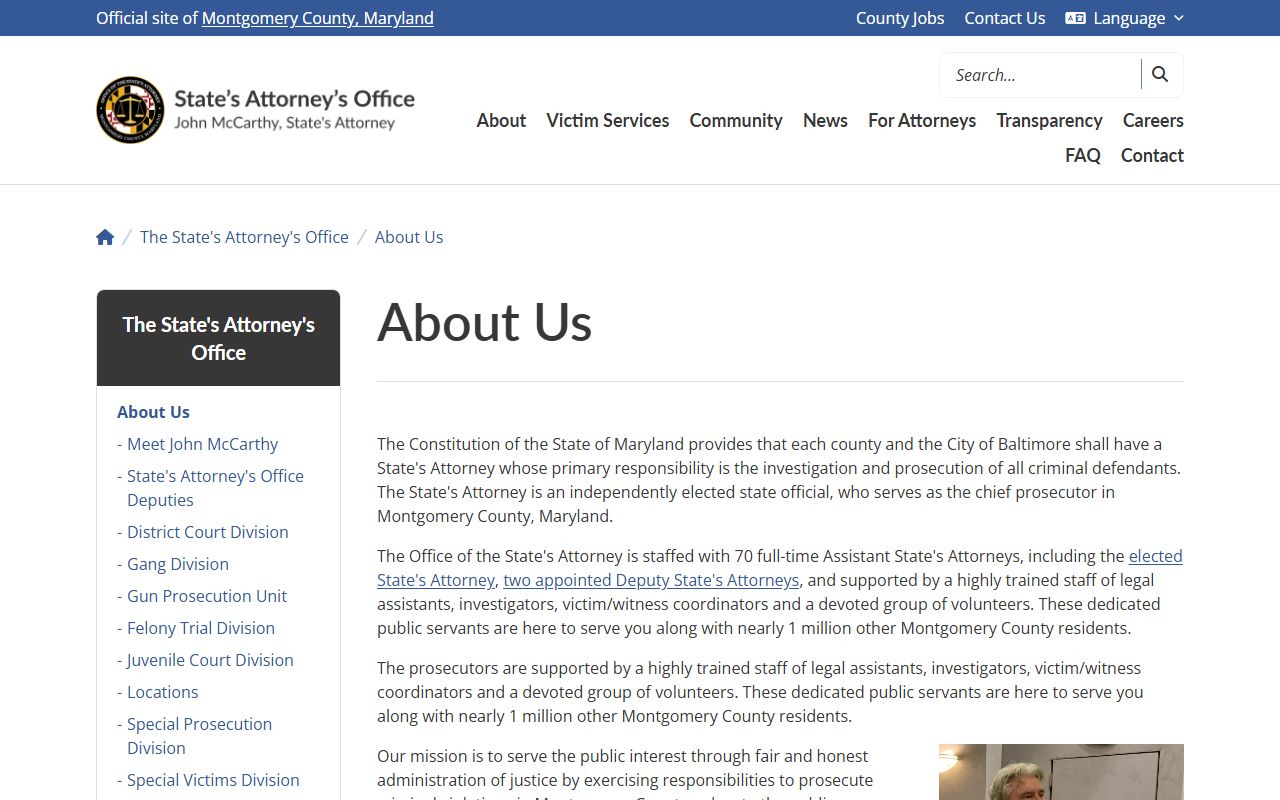
A criminal file can include charging documents, indictments, statements of charges, bond information, counsel appearances, motions, plea records, verdicts, and sentencing orders. The State's Attorney's about page, shown below, explains how the office handles these cases.
Federal crimes are different. Those cases go through the U.S. Attorney's Office for the District of Maryland, shown here, and not through county courts.
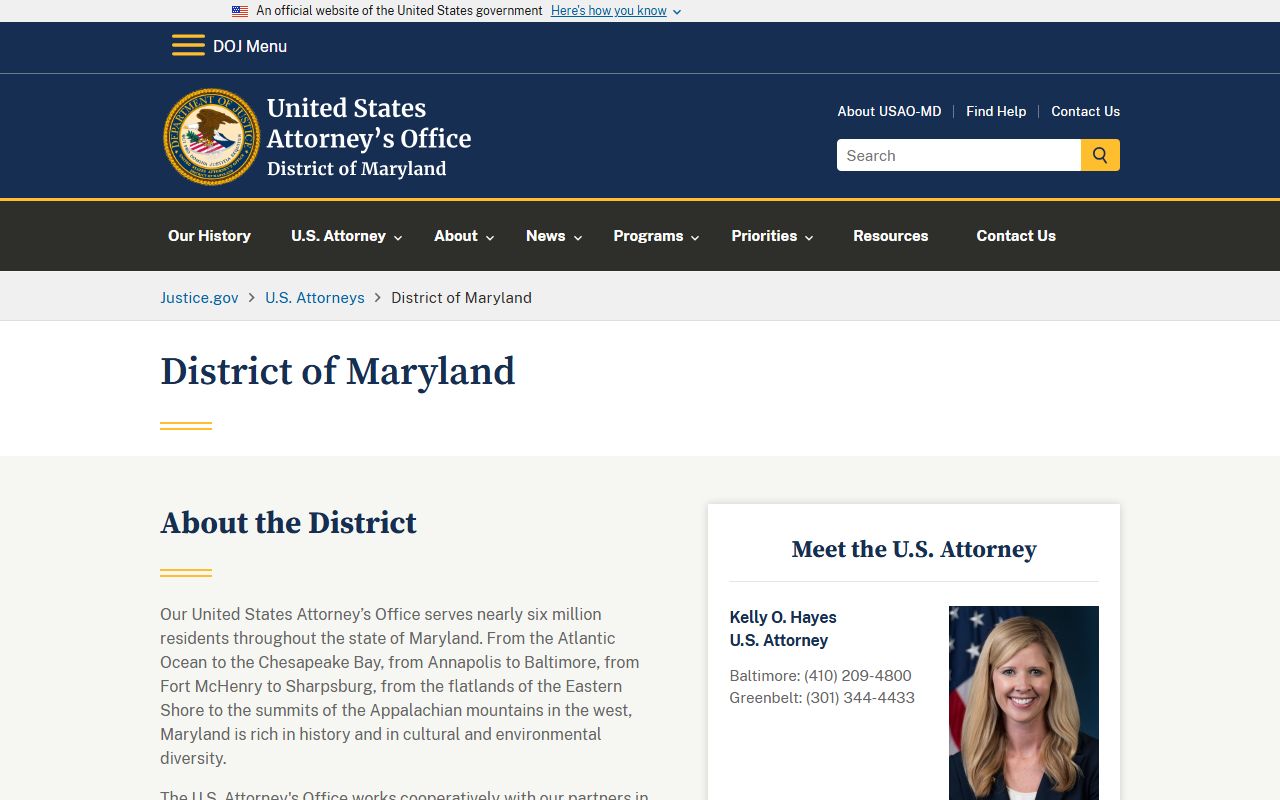
For federal docket access, the federal courts use PACER rather than the state portal.
Expungement and Shielding of Criminal Records
Maryland law lets people clear qualifying records. Expungement removes a record from ordinary public access. Shielding restricts public access but keeps the record available to certain criminal justice and licensing bodies. Both are disposition-driven, so eligibility depends on the outcome and a waiting period.
Expungement eligibility is set by Maryland Code § 10-105, shown below. Common qualifying outcomes include acquittal, dismissal, nolle prosequi, and probation before judgment for eligible offenses after a waiting period.
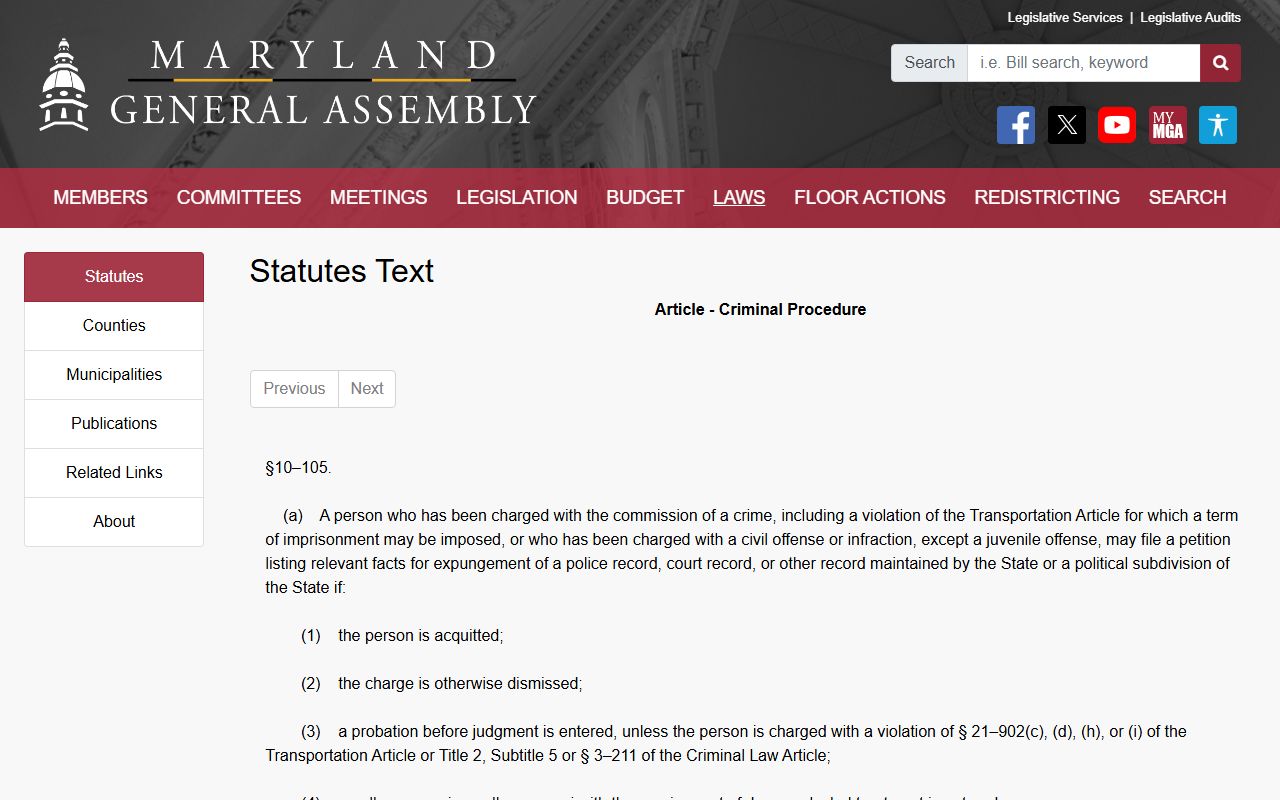
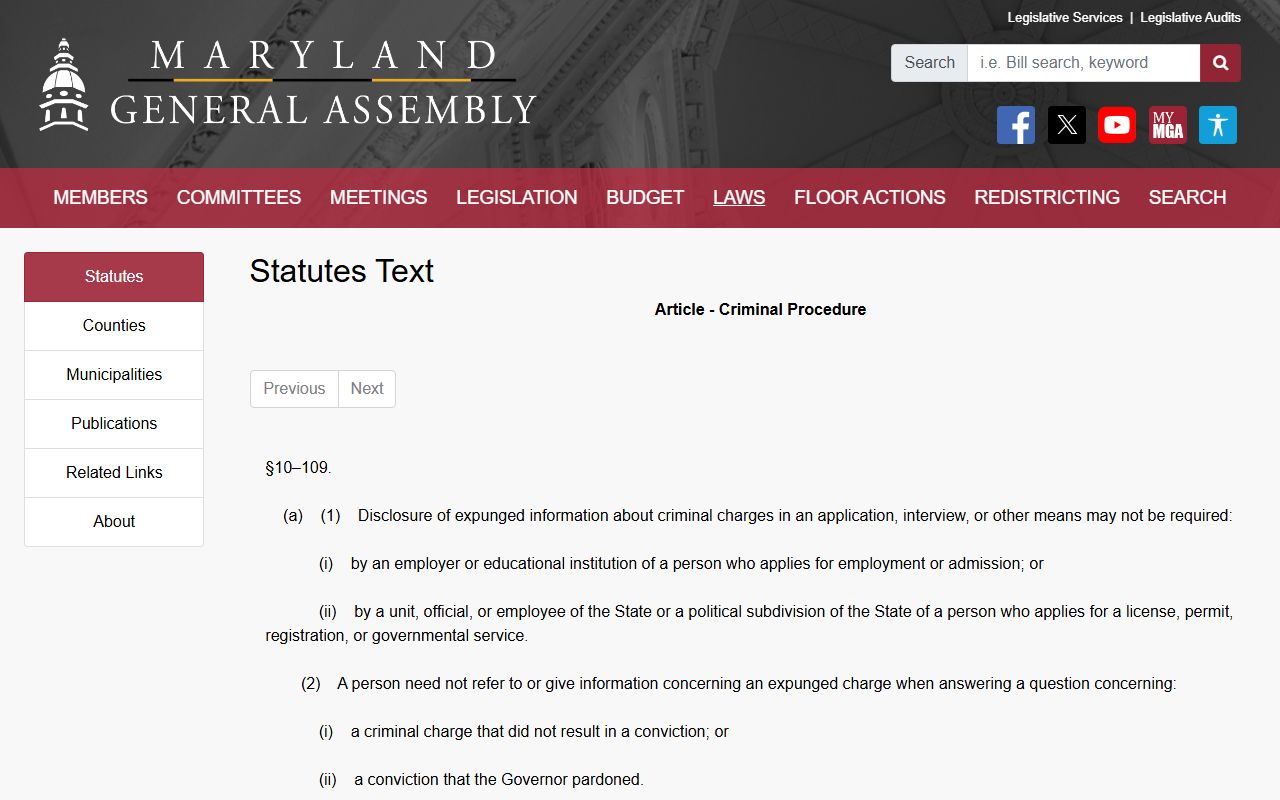
The legal effect of expungement is set by Maryland Code § 10-109, shown here. Once a court grants the order, agencies and courts must treat the record as removed from public view.
Sealed vs Expunged Records
People use these words as if they mean the same thing. They do not. The table below lays out the difference under Maryland practice.
| Term | What Happens | Who Can Still See It |
|---|---|---|
| Expunged | Record removed from ordinary public access | Limited, under the expungement order |
| Shielded | Public access restricted by petition or order | Certain criminal justice and licensing entities |
| Sealed | Record closed by statute, rule, or court order | Parties and court-authorized persons |
Note: filing in the wrong court, an unresolved related charge, or too short a waiting period are common reasons a petition is denied.
Victim Services and Public Defense
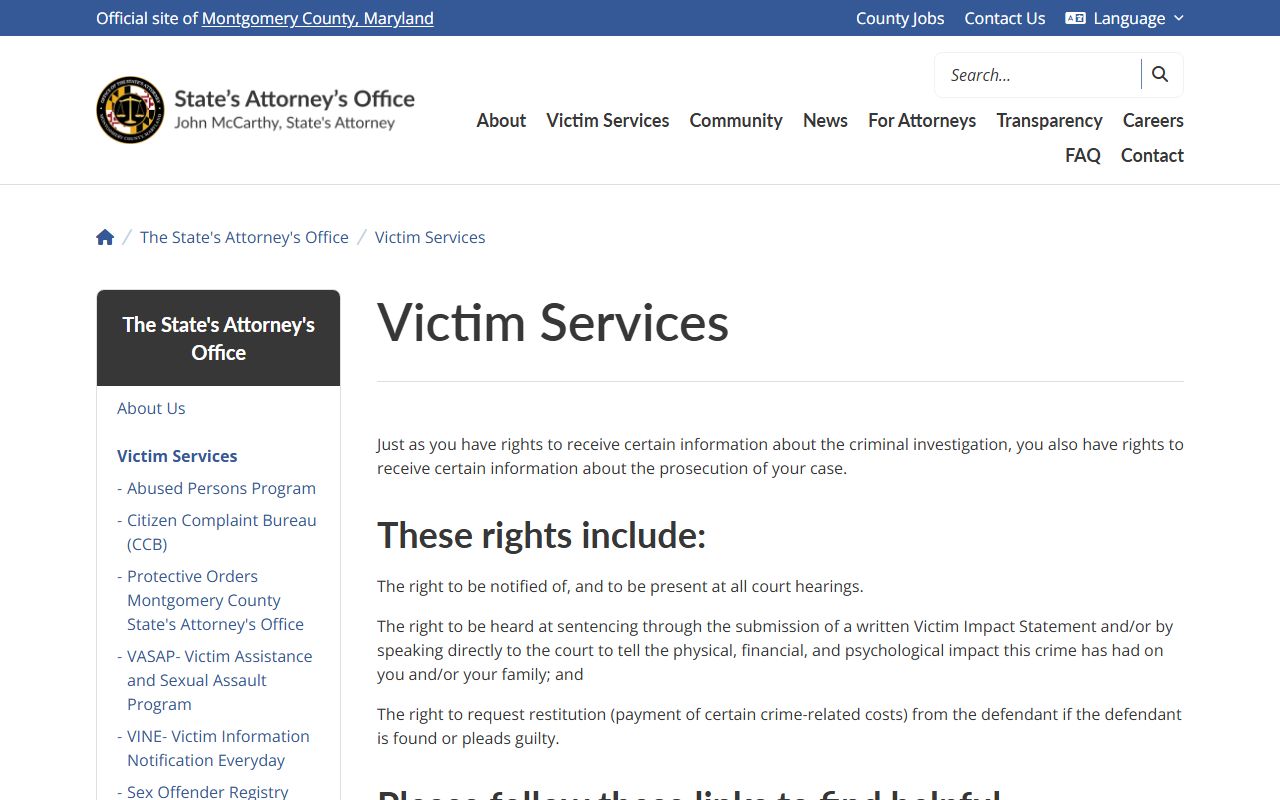
Two offices matter for people directly involved in a case. The State's Attorney's Victim Services unit supports victims and witnesses through the process, including victim-impact and notification questions. Its page is shown below.
People who cannot afford a lawyer may qualify for the Maryland Office of the Public Defender. The Montgomery County office, shown here, handles eligible criminal, juvenile, and commitment matters based on income and case type.

If there is an active warrant tied to a charge, see the warrant records page, and for DUI or DWI matters, the traffic court records page covers the overlap.
Arrest Records and Background Checks
Arrest data often gets pulled into background checks, but the rules are strict. This site is not a consumer reporting agency, and its information cannot be used for credit, employment, tenant, or insurance screening. For an official Maryland criminal history, people use the state's central repository process through the Department of Public Safety and Correctional Services, which handles fingerprint-based record checks.
An arrest with no conviction can still appear in records until it is expunged or shielded. That is why the expungement steps above matter so much for people whose charges were dropped or resolved without a guilty finding. The Circuit Court's record-check page is the local starting point for confirming what shows on a Maryland record.