
Public Information Act vs Court Records
Maryland runs two separate access systems, and mixing them up wastes time. The Public Information Act covers records held by executive and local agencies, like a county department or the police. Court case files, such as a Circuit Court docket or a filed pleading, follow Judiciary access rules and court-specific confidentiality statutes instead. A police report may be a PIA record, while the criminal case it leads to is a court record.
The Maryland Attorney General publishes guidance on the Public Information Act, shown below.

For court files, use Central Files and Case Search instead, as covered on the court records page. Sorting the record type first saves a misdirected request.
The Maryland Public Information Act Framework
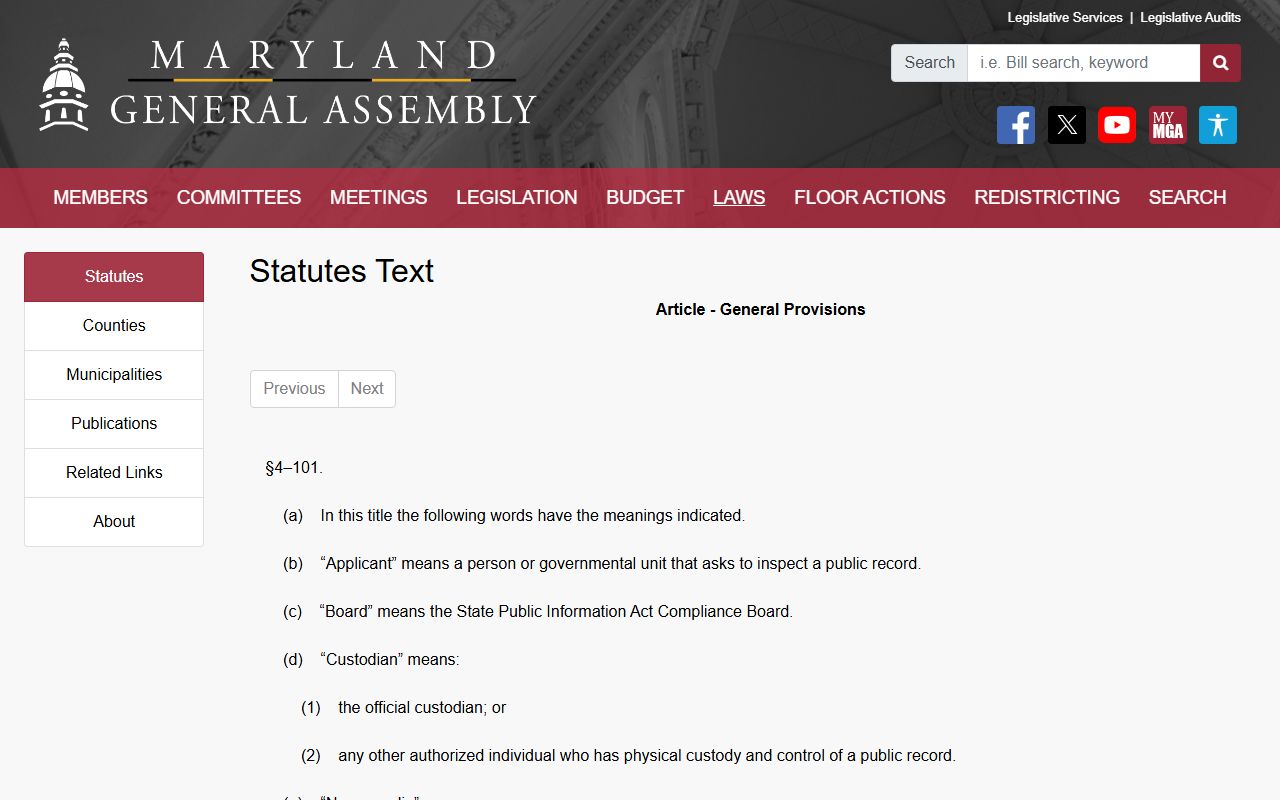
The Public Information Act sets who can request records, what counts as a public record, and when access can be denied. It starts from a strong presumption of openness. The definitions that drive the whole process are set by Maryland Code § 4-101, shown below.
The general right to inspect is set by Maryland Code § 4-201, shown here. It establishes that public records are open for inspection unless another law provides otherwise.
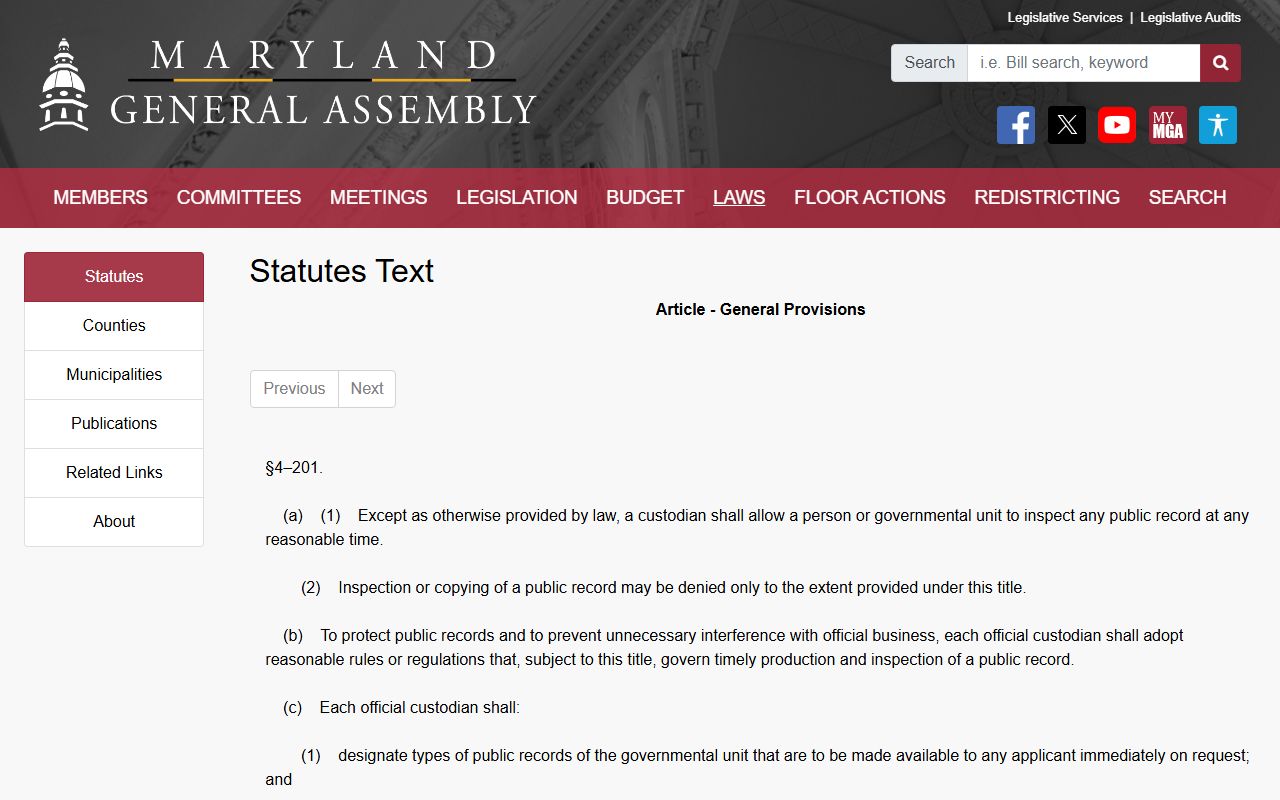
These two sections together define what you can ask for and who controls it. The presumption is access, and the burden falls on the agency to point to a law that allows withholding a record.
How to File a Public Records Request
A PIA request goes to the agency that holds the record, not to a central county window. Identify the right office first, then write a clear request. The more specific you are, the faster and cheaper the response tends to be.
- Identify the agency or department that holds the record.
- Write a request describing the records as specifically as you can.
- Include your name and contact information for follow-up.
- Submit it to the agency's PIA officer or records custodian.
- Ask for a fee estimate before large requests are processed.
For court documents, this path does not apply. Court copies go through the Clerk of the Circuit Court copy process instead.
What a Public Records Request Includes
A PIA request does not need a special form, but it should contain a few core elements. The table below lists what to include so the custodian can act on it.
| Element | Type | Required | Notes |
|---|---|---|---|
| Requester name | Text | Yes | Identifies who is asking. |
| Contact information | Email/Phone | Yes | For the response and any fee estimate. |
| Record description | Text | Yes | Be specific about dates, topics, and offices. |
| Format preference | Text | No | Paper or electronic copies. |
| Fee waiver request | Text | No | May be requested in the public interest. |
Note: a narrow, well-described request is cheaper and faster than a broad one that pulls thousands of pages.
Response Timing
The Public Information Act sets deadlines for agencies to respond. A custodian must produce records promptly or explain a denial within the statutory window. Timing rules are set by Maryland Code § 4-203, shown below.
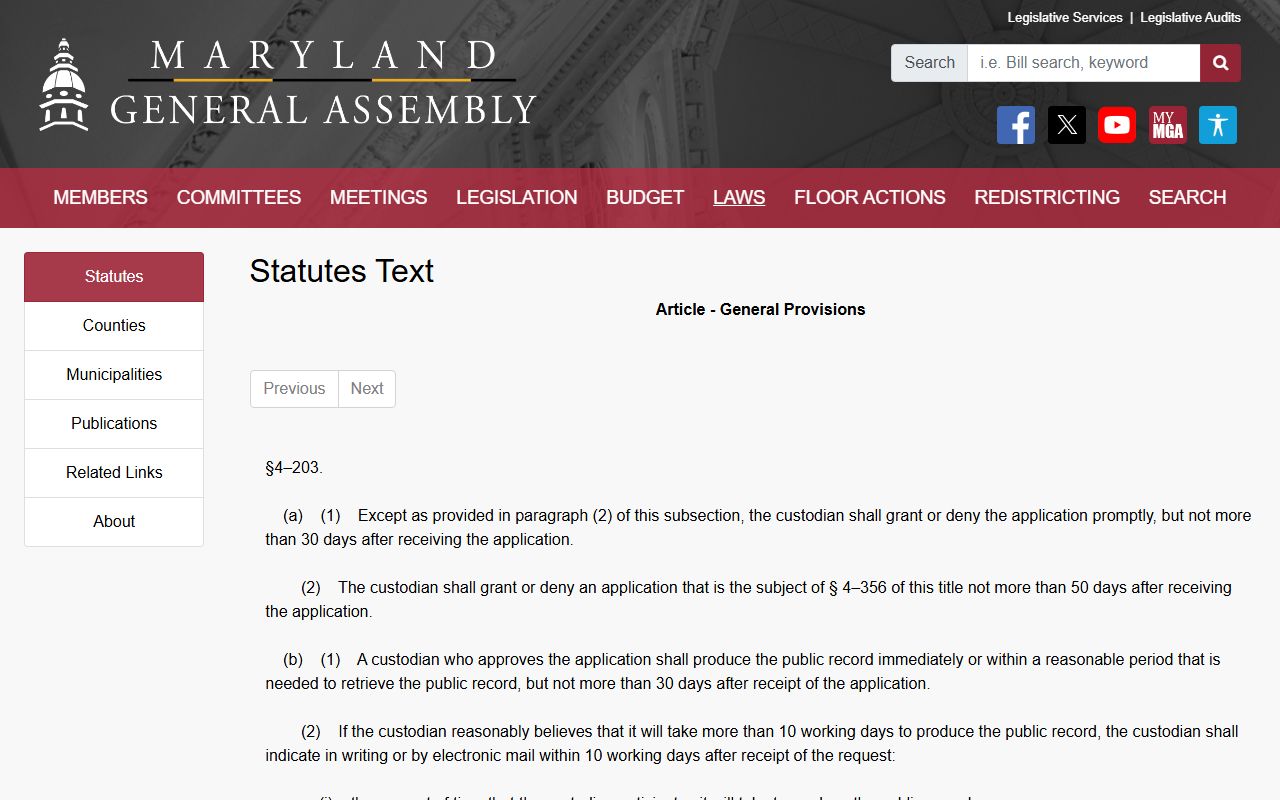
If an agency misses the deadline or stalls, the timing statute is what you point to when you follow up. Keep a copy of your request and the date you sent it.
Public Records Fees
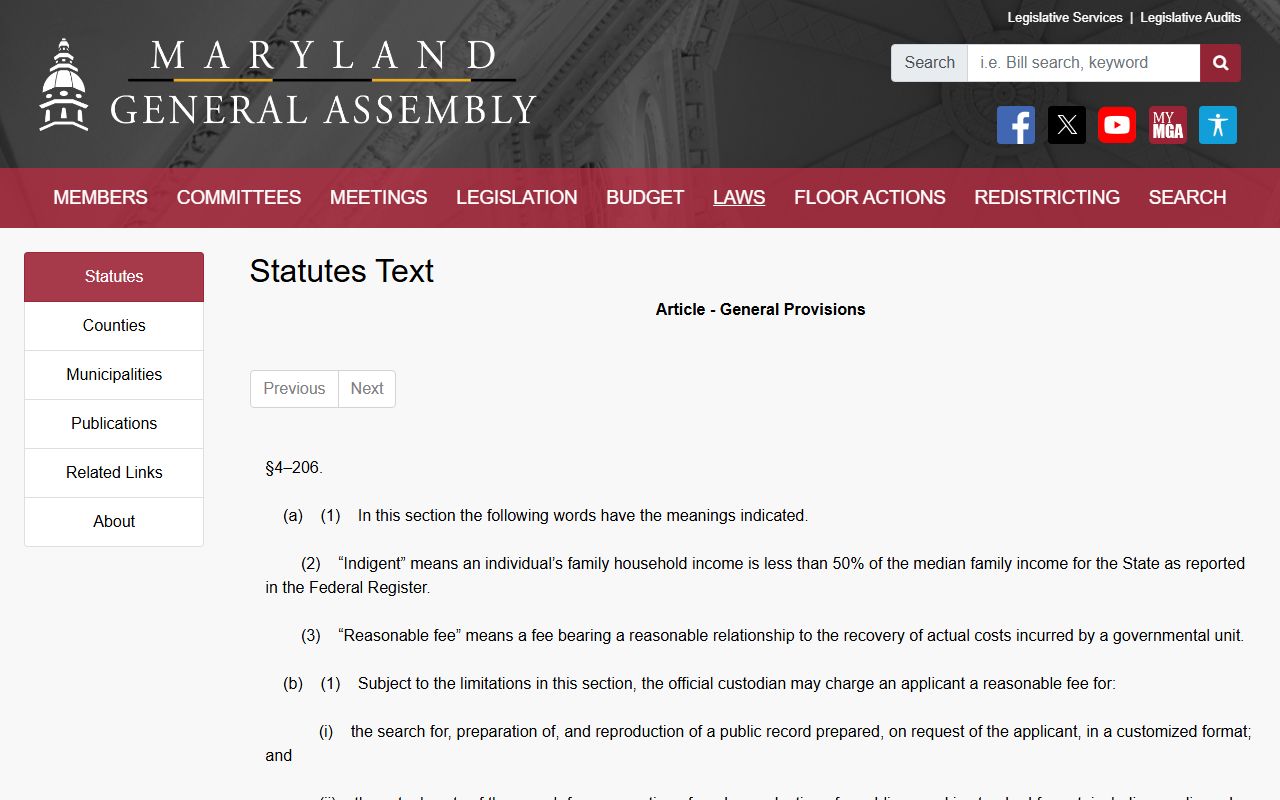
Agencies may charge for search, review, and copying under the Public Information Act. Fees and waivers are governed by Maryland Code § 4-206, shown below. Court copy fees are separate and follow the court's own schedule, not PIA charges.
| Charge | How It Is Set |
|---|---|
| Search and review | Based on staff time under the PIA |
| Copying | Per-page or actual cost |
| Fee waiver | May be granted in the public interest |
Ask for an estimate before a large request, and request a waiver if the records serve the public interest. A clear, narrow request keeps the staff-time charge down.
Denials and Confidential Records
Not every record is open. The Public Information Act requires denial where another law makes a record confidential. That bridge to other laws is set by Maryland Code § 4-301, shown below.
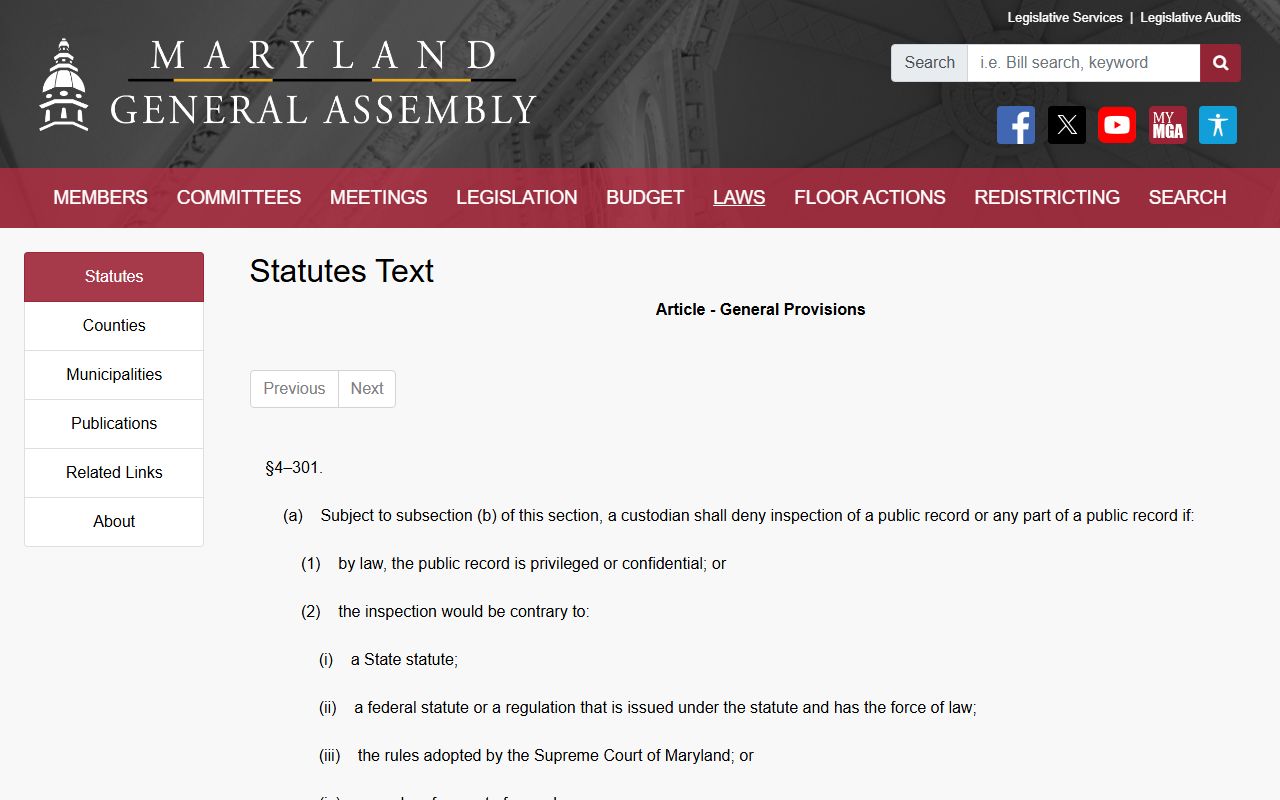
Records tied to juvenile, adoption, sealed, or expunged court matters stay confidential. Personal privacy, investigative material, and certain personnel records can also be withheld. If an agency denies a PIA request, you can challenge it through administrative and court processes, and the Attorney General's guidance explains the options.
Police and Jail Records
Police reports and correction department administrative records are agency records, so they generally fall under the Public Information Act rather than court rules. That means a request goes to the agency's records custodian, not to Central Files. Some material is withheld, especially active investigative files and personal information that the law protects.
Jail and custody information is different again. The Department of Correction and Rehabilitation confirms custody by phone through its Inmate Records Section rather than through a written PIA request for most basic status questions. For the custody lookup, see the inmate records page. Where you need an actual police report or an agency document, the PIA request process above is the right route.
Note: an arrest report held by police and the criminal case held by the court are two different records with two different access paths.
Challenging a Denial
If an agency denies a request or charges a fee you think is wrong, you have options. The Public Information Act provides administrative and court routes to challenge a denial. Maryland also offers an ombudsman process to help resolve PIA disputes without litigation, and the Attorney General's office publishes guidance on how the law works.
Start by asking the custodian to explain the denial in writing and to cite the law it relies on. Many disputes come down to an overbroad request or a misunderstanding about which records exist. A narrower, clearer follow-up request often resolves the issue faster than a formal challenge. When it does not, the statutory remedies are there to use.
County Records Beyond the Courts
The county and its Circuit Court hold many records outside the case file. Land records and recorded liens are kept at the courthouse in the North Tower. Marriage licenses run through the Circuit Court. Estate records go through the Register of Wills. Police and correction records are agency records reachable through their own request processes.
So the right office depends on the record. For court files, see court records. For estates, see probate records. For arrest and charge questions, see arrest records.
People handling a request without help can lean on official self-help resources. Maryland Judiciary Legal Help and the statewide court forms library cover court-related needs, while the Attorney General's PIA guidance covers agency requests. Knowing which guide to use comes back to the same first question: is this a court record or an agency record?