
How to Find Recently Released Montgomery County Inmates
Montgomery County does not post a list of people released in the last few days. The official way to confirm whether someone is still held or has been released is to call the Department of Correction and Rehabilitation Inmate Records Section at 240-777-9730, which answers 24 hours a day. Staff can confirm custody, a transfer, or a release.
If the person was sentenced to a longer term, they may have moved to a state facility. In that case, the search moves to the Maryland DPSCS locator. Federal cases move to the Bureau of Prisons.
- Call DOCR Inmate Records at 240-777-9730 to confirm county custody or release.
- Search the Maryland DPSCS locator if the person moved to state prison.
- Search the Bureau of Prisons locator for federal custody.
- Set up VINELink alerts to be notified of any custody change.
These tools cover different systems, so the right one depends on where the person was held.
There is a reason the county does not post a daily release list. Custody data changes by the hour, and a public list would go stale fast or risk errors about who is in or out. The phone line gives a current answer for local custody, and the state and federal locators handle people held outside the county jail. Together they cover almost every situation a record seeker runs into.
Setting Up Release Notifications
VINELink is a free service that sends alerts when an offender's custody status changes. You register by phone, email, or text, and the system notifies you of a release, transfer, or escape where the data is available. It is the most reliable way to avoid calling the jail over and over. The VINELink search page is shown below.
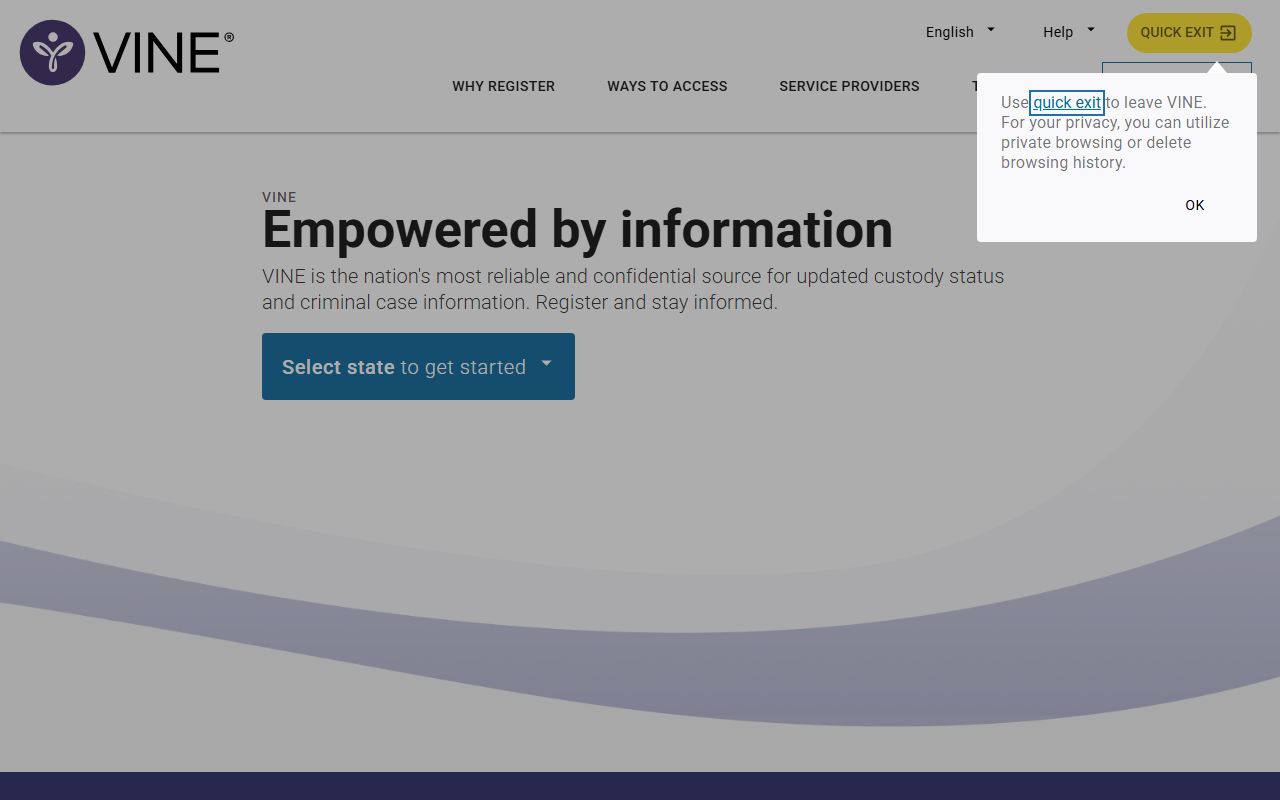
Visit VINELink to search and set up notifications. Choose Maryland, then search by name or ID. For people worried about safety, registering for alerts is an important first step, and it works even when you cannot reach the jail by phone.
Searching State and Federal Released Inmates
Two official locators cover custody beyond the county jail. The Maryland DPSCS locator handles state-sentenced people. The Bureau of Prisons locator handles federal custody and people released from federal custody since 1982. The Maryland DPSCS locator is shown below.
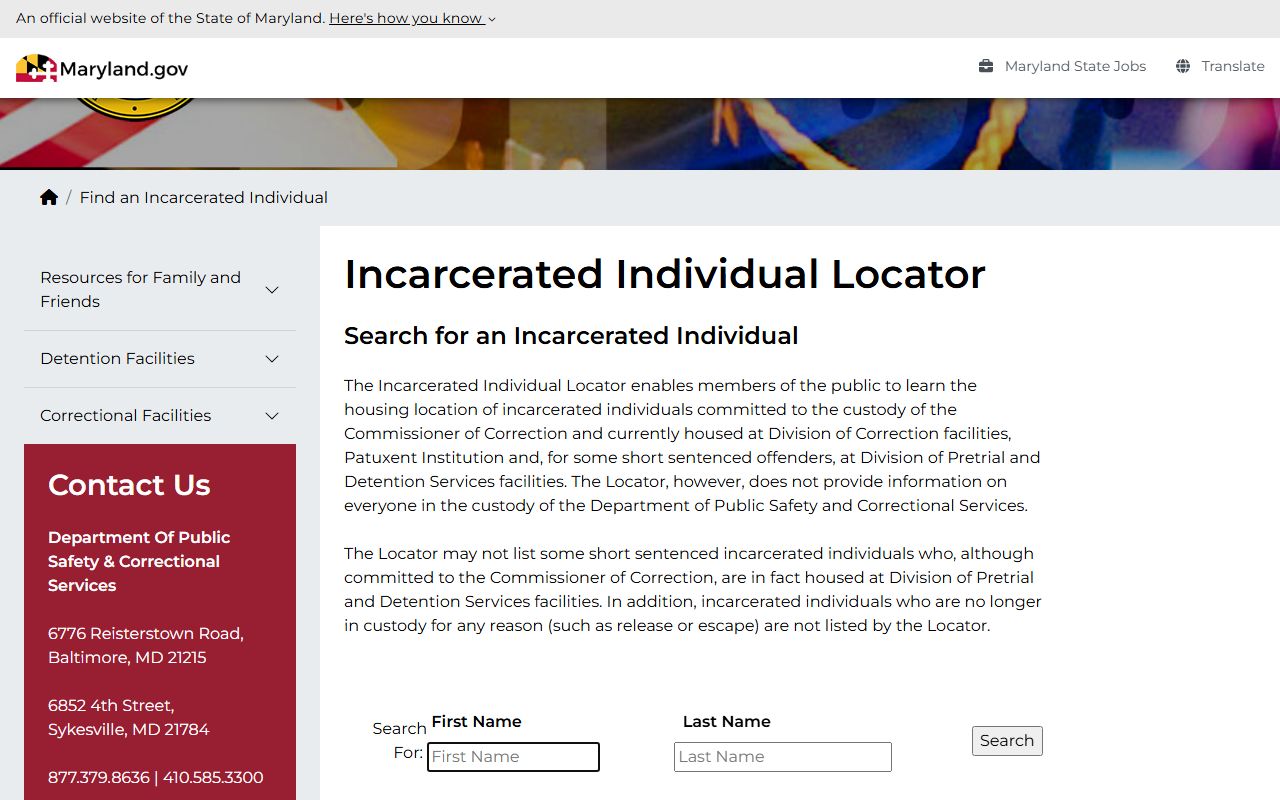
The Maryland DPSCS locator uses a simple name search.
| Field | Type | Required | Notes |
|---|---|---|---|
| First Name | Text | Conditional | Narrows the search. |
| Last Name | Text | Yes | Primary search field. |
| DOC ID | Text | No | Direct lookup if the number is known. |
The federal Bureau of Prisons locator, shown below, offers more search paths.
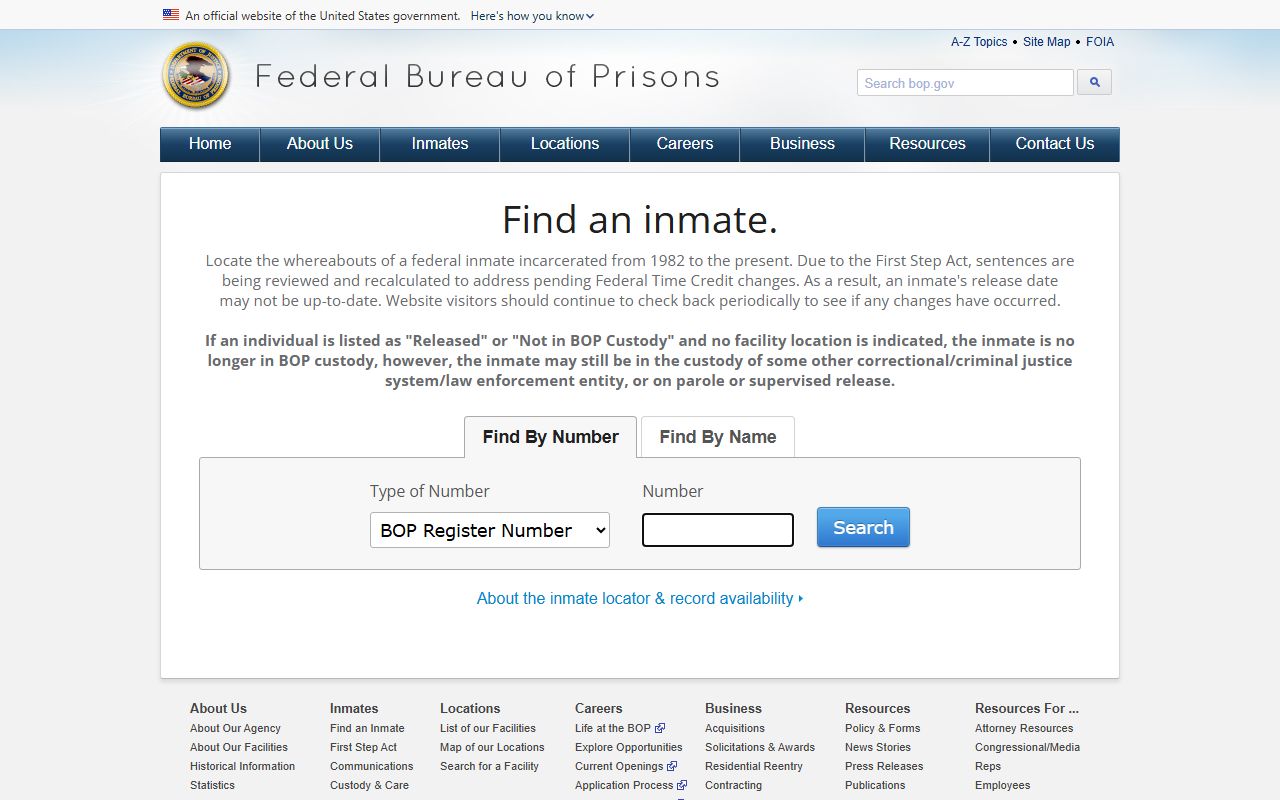
| Field | Type | Required | Notes |
|---|---|---|---|
| BOP Register Number | Text | Conditional | Direct lookup by federal ID. |
| First / Last Name | Text | Conditional | Name-based search. |
| Race / Sex / Age | Dropdown | No | Narrows name results. |
A BOP profile shows the register number, name, age, and a release date or current location. It does not show local Montgomery County charges or Maryland court dockets.
Verifying a Release in Person or by Phone
Sometimes the locators are not enough, especially right after a release. The county phone line is the most current source for someone held locally. Call Inmate Records and ask staff to confirm the person's status. For state and federal cases, the locators update on their own schedules, so a very recent change may take time to appear.
Keep the person's full legal name and date of birth ready. Property return, bond refunds, and release timing all depend on the facility's process, so confirm details directly rather than assuming a release happened. The inmate records page covers the custody lookup in full. If a name search comes back empty, try known aliases or confirm the spelling, since a small error can hide the right record.
The Maryland Sex Offender Registry
After some releases, registration is required. The Maryland Sex Offender Registry is a public search maintained by DPSCS. It lets you search by name, address, or area, and it shows registrant details where the law allows. This is separate from the inmate locators and serves a different purpose.
| Field | Type | Required | Notes |
|---|---|---|---|
| Name | Text | Conditional | Search by registrant name. |
| Address / Location | Text | Conditional | Search by area, county, or ZIP. |
| Radius | Dropdown | No | Sets a search distance around a point. |
A registry profile may show a name and aliases, a photo where available, a registration address or mapped location, the offense and conviction details, physical descriptors, and compliance status, all subject to the display rules in Maryland law.
Reentry Resources in Montgomery County
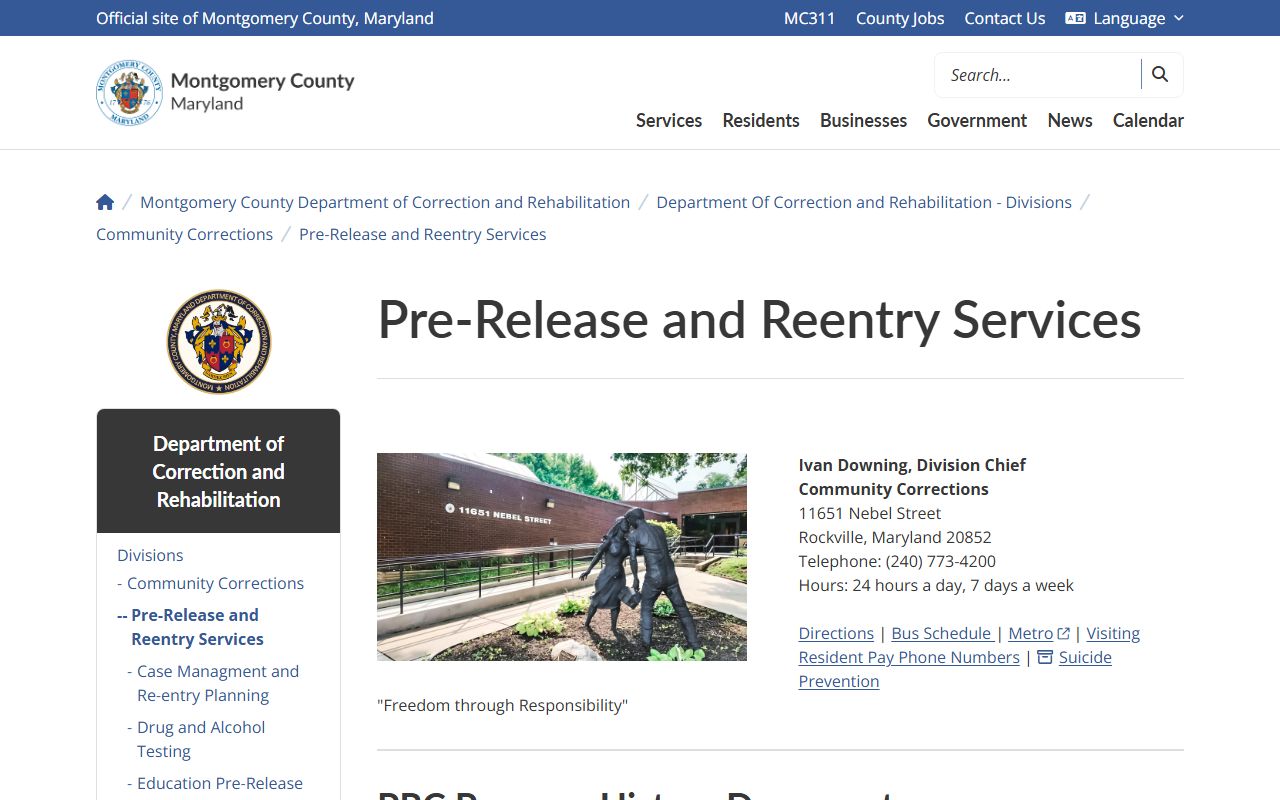
The county's reentry program is a real strength. Pre-Release and Reentry Services runs community corrections, pre-release programming, and resident guidebooks. Federal officials recognized it as an Exemplary Project in 1977, and it remains the core local reentry component. Its page is shown below.
State-level support comes through Maryland DPSCS reentry services. Local legal aid can help with expungement and shielding, identification, benefits, employment, and housing. For record clearing, see the arrest records page.
Reentry needs tend to cluster in the first weeks home. Common ones include getting a state ID, applying for benefits, finding work and housing, and stabilizing family and child-support matters. Court-approved forms for many of these steps are in the Maryland Judiciary forms library, and the county's self-help resources point returning residents to the right office. Tackling a record-clearing petition early can remove a barrier that otherwise blocks jobs and housing for years.
Pre-Release and Reentry Services (PRRS)
Nebel Street program
240-773-4200
Community corrections and reentry
Parole and Probation Information
Many people leave custody on supervision rather than fully free. Parole follows a release from a prison sentence and is overseen by the state. Probation is ordered by the court, often in place of or after a jail term. Both come with conditions, such as check-ins, treatment, and staying out of new trouble.
A violation can send a person back to custody. Probation matters run through the court that handled the case, so the docket shows hearings and any violation filings. To follow that record, use Maryland Judiciary Case Search and the court dockets page. Supervision questions for state cases route through Maryland DPSCS parole and probation resources.
Note: a person on supervision is not the same as a person who is fully released, so confirm the exact status before drawing conclusions about custody.
Property, Bond, and Release Timing
Release rarely happens the instant a case ends. Paperwork, property return, and bond refunds all take time, and each facility runs its own process. Someone ordered released at a hearing may not walk out for hours while the facility completes its steps.
Bond money posted with the court is handled through the court's process, not the jail's, so refunds follow a separate track. Personal property logged at intake is returned at release. If you are picking someone up, call the facility first to confirm the timing rather than waiting at the gate. The county phone line can tell you whether the release has been processed.
Rights Restoration After Release
Release does not restore every right at once. In Maryland, voting rights generally restore after release from incarceration for a felony conviction, but people should confirm current Board of Elections guidance before they register. Firearm rights are separate and more restrictive, and release from jail does not restore them where federal or state prohibitions apply.
Parole and probation add another layer. People on supervision have conditions to meet, and a violation can return them to custody. To track a connected case through the courts, see the court records page, and to check for any open warrant, see warrant records.
Restoration is rarely automatic across the board, so it helps to handle each right on its own track. Voting follows one set of rules, firearms another, and professional licenses yet another. The safest path is to confirm each one with the agency that controls it before assuming a right has returned. Getting this right early avoids costly mistakes for someone rebuilding after release.